The Hidden Threat: A Guide to Professional Mold Removal
Discovering mold in a home or commercial building is an unsettling experience. Beyond the unsightly discoloration on walls or ceilings, the presence of mold signals an active moisture problem and potential indoor air quality risks. While minor surface mildew in a bathroom can often be tackled with household cleaners, significant mold infestations require systematic, professional intervention.
Attempting a DIY cleanup on a deep-seated fungal issue often spreads microscopic spores throughout the HVAC system, making the problem worse rather than solving it.
Why DIY Remediation Often Fails
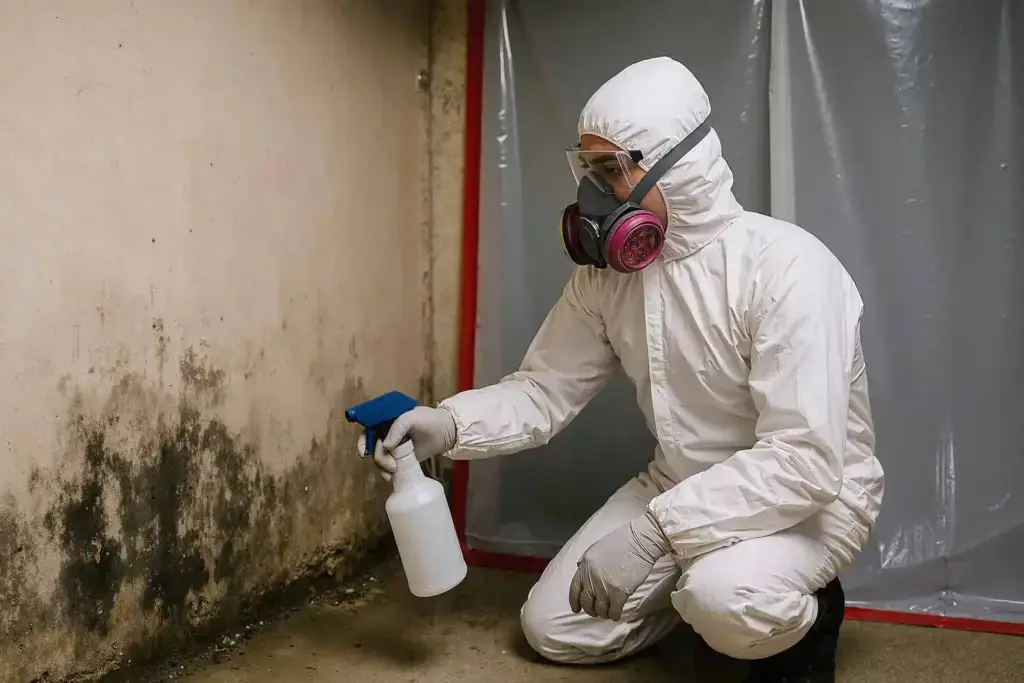
Many property owners assume that spraying bleach or a commercial antifungal spray on a patch of mold will eradicate the issue permanently. In reality, surface treatments miss the root cause and the hidden extent of the growth.
- Surface-Level Treatment: Bleach typically only whitens mold on non-porous surfaces while leaving the roots embedded inside porous materials like drywall, wood framing, and insulation intact.
- Spore Dispersal: Scrubbing dry or semi-dry mold without proper containment or HEPA filtration releases millions of airborne spores into neighboring rooms, contaminating previously clean areas of the building.
- Ignoring the Moisture Source: Mold does not grow without a continuous moisture supply, such as a slow plumbing leak, roof seepage, or high relative humidity. Treating the mold without fixing the underlying water intrusion guarantees it will return.
The Professional Remediation Process
Certified restoration specialists follow an engineered, step-by-step protocol to safely isolate, remove, and prevent the recurrence of fungal growth.
- Comprehensive Assessment and Testing: Technicians use thermal imaging cameras and moisture meters to map out hidden water pockets behind walls and determine the exact species and concentration of the infestation.
- Containment and Negative Air Pressure: Workers erect physical polyethylene barriers and deploy negative air machines equipped with HEPA filters. This ensures that airborne spores generated during removal cannot escape into living or working spaces.
- Safe Removal and Disposal: Heavily contaminated porous materials are carefully bagged and discarded according to environmental regulations. Salvageable framing and subfloors undergo specialized antimicrobial washing and sanding.
- HEPA Vacuuming and Air Scrubbing: High-efficiency particulate air filtration units scrub the indoor air continuously during and after physical removal, reducing airborne spore counts to safe, normal baseline levels.
Prevention and Post-Remediation Control
The final and most vital phase of mold removal is moisture management. Installing dehumidifiers in damp basements, repairing plumbing leaks promptly, and ensuring proper ventilation in high-humidity zones like commercial kitchens and bathrooms protect the property from future outbreaks.
Conclusion: Restoring a Healthy Environment
Fungal infestations are more than an aesthetic nuisance—they are an environmental health concern that compromises building integrity. Entrusting mold removal to certified specialists ensures the underlying moisture source is corrected, spores are safely contained, and the indoor air quality of your property is fully restored.